Why your own positions work better
- They are relevant. They come from your openings and your typical middlegames, so the patterns recur in your next games.
- They are memorable. You remember the game, the opponent and the moment — which makes the lesson stick.
- They target real weaknesses. Every position is one where you actually lost winning chances.
How it works in Doathingy
- A coaching report analyses your games with Stockfish and picks the moments where you made a mistake or blundered.
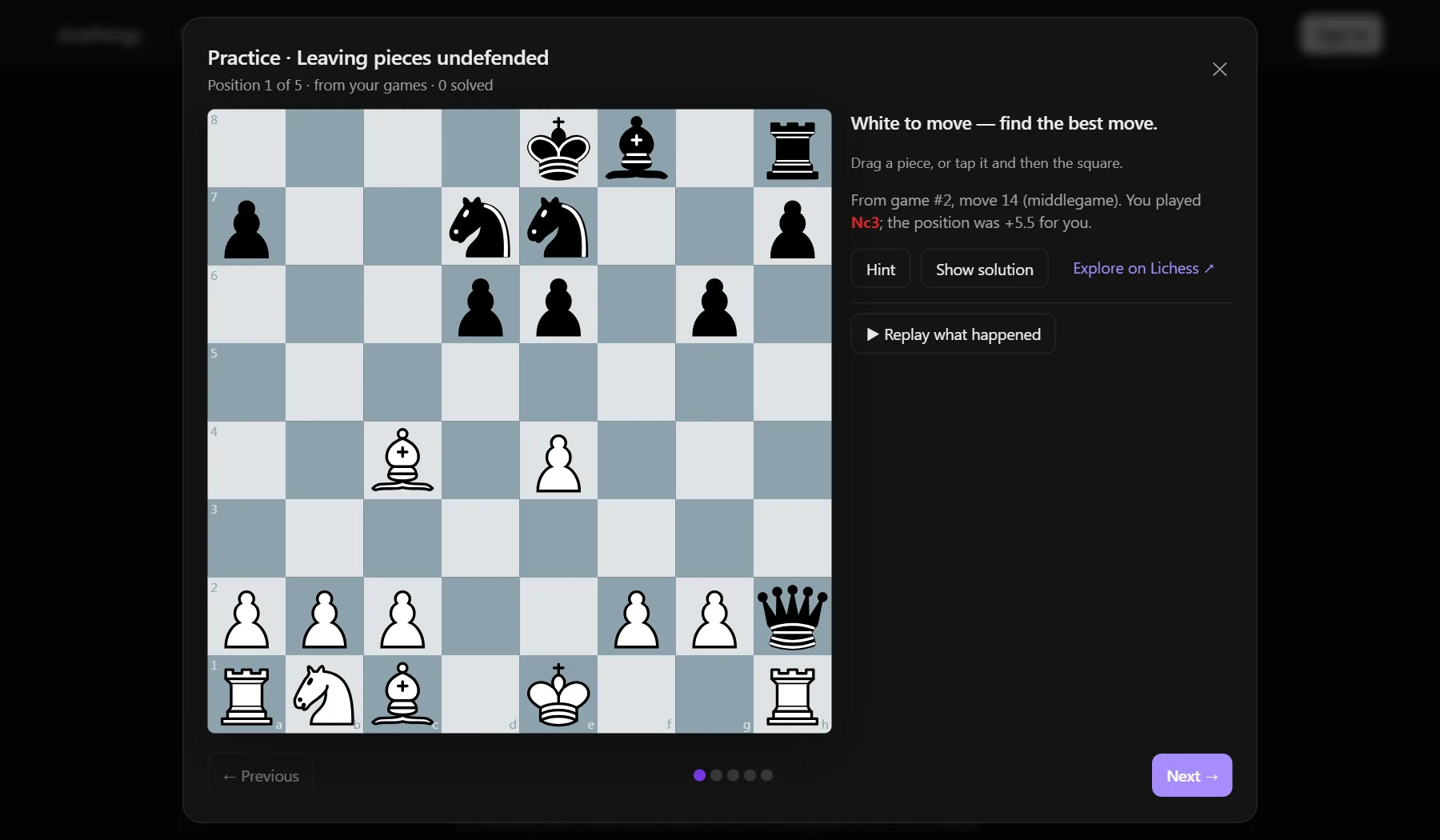
- Each area to develop links to the positions that illustrate it. Open one and it becomes a puzzle: your side to move, find the better move.
- Drag a piece or tap it and then the square. The engine’s move is right — and any other move that Stockfish rates nearly as good (within 4% winning chances) counts too.
- Stuck? Take a hint (the piece to move) or show the solution with the engine’s line.
- Replay what happened steps through the moves actually played from that position, so you can see how the game went wrong — and Full game analysis opens the whole game at that move.
Make it a habit
Five positions a day from your own games, repeated until you find the move straight away, will do more for your results than an hour of random puzzles. Pair it with themed puzzles for the same weakness — every report links to the right Lichess puzzle themes for each area.
Turn your mistakes into puzzles
Practice positions come with every coaching report.
More chess guides
- Free Chess.com Game Review with Stockfish — Every Game, No Membership
- What Does Chess Accuracy Mean? How Accuracy Scores Are Calculated
- Blunder, Mistake or Inaccuracy? How Chess Moves Are Classified
- How to Analyse Your Chess Games (and Actually Improve)
- Why Do I Keep Losing at Chess? What Your Games Usually Show
- Chess.com Stats Dashboard: Win Rate by Colour, Opening, Time of Day and More
- AI Chess Coach: A Coaching Report from 20, 50 or 100 of Your Games
- Doathingy Chess — free game review, stats and AI coaching